Rutile titanium dioxide
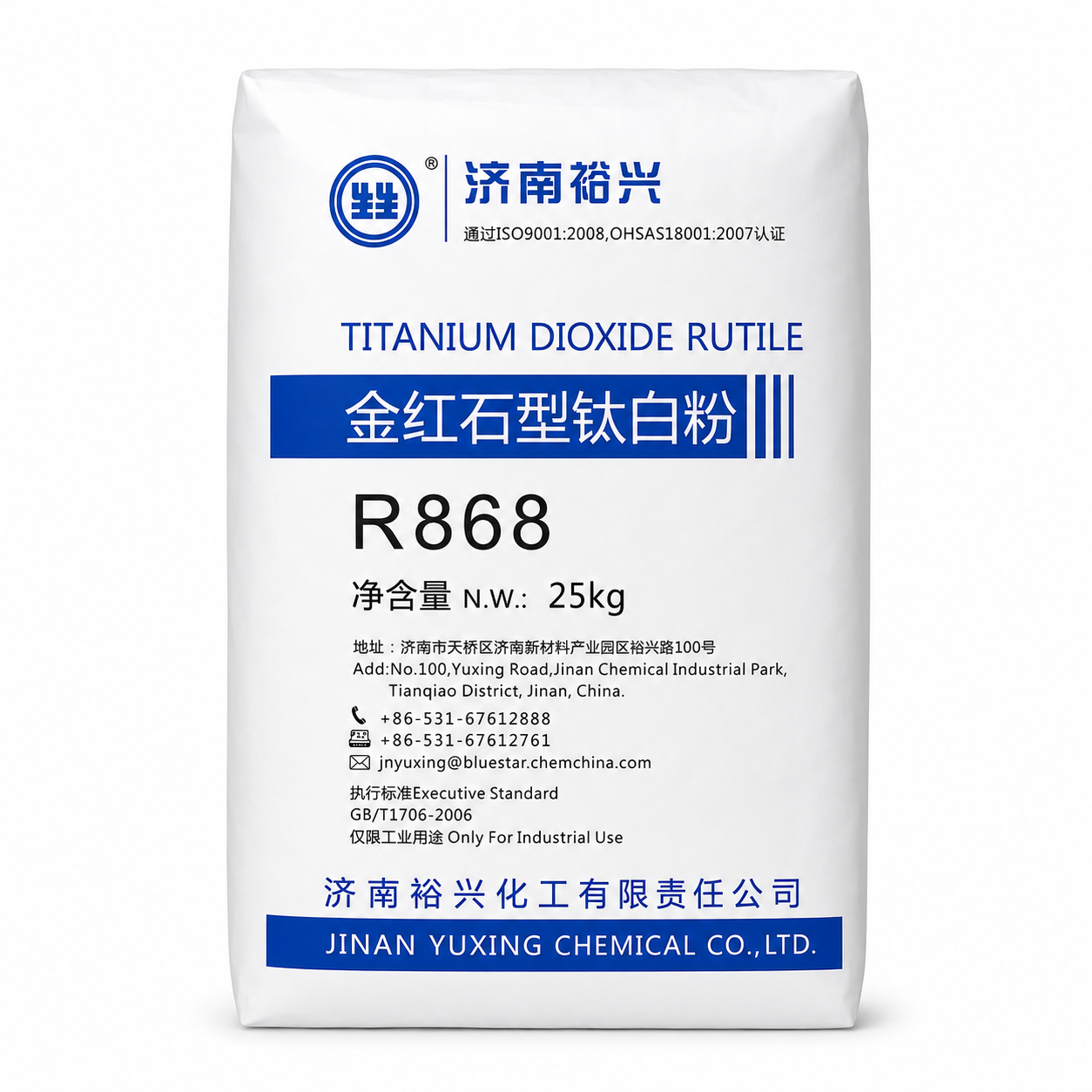
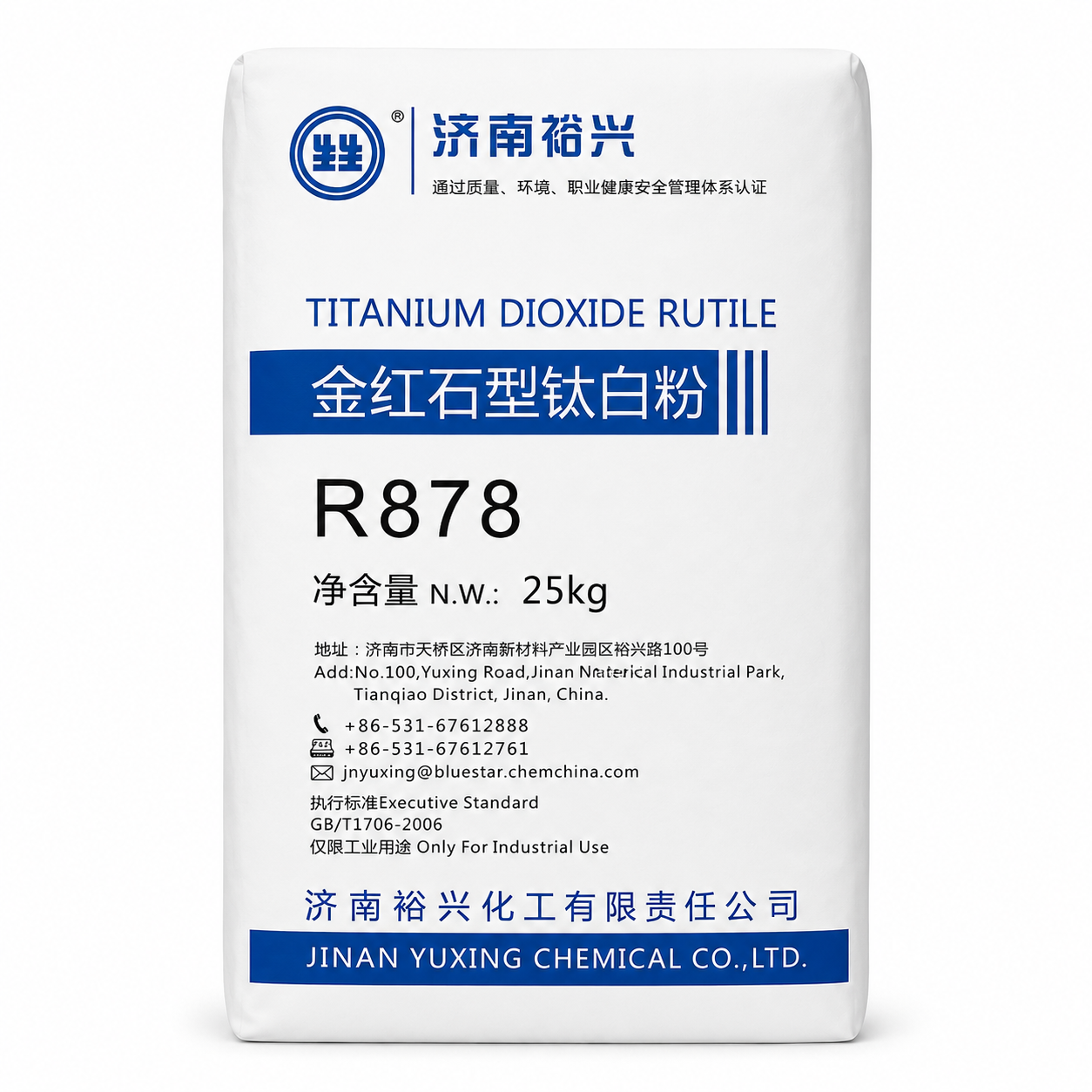
Four sulphate-process rutile TiO₂ grades manufactured by Jinan Yuxing Chemical: universal grades R818 and R838, coating-focused R868, and plastics-focused R878. TiO2 Source coordinates product information and inquiries.
Four rutile grades.
Each grade is tuned for a balance of dispersion, durability and cost. Not sure which fits your formulation? Send us your application and we'll recommend one.
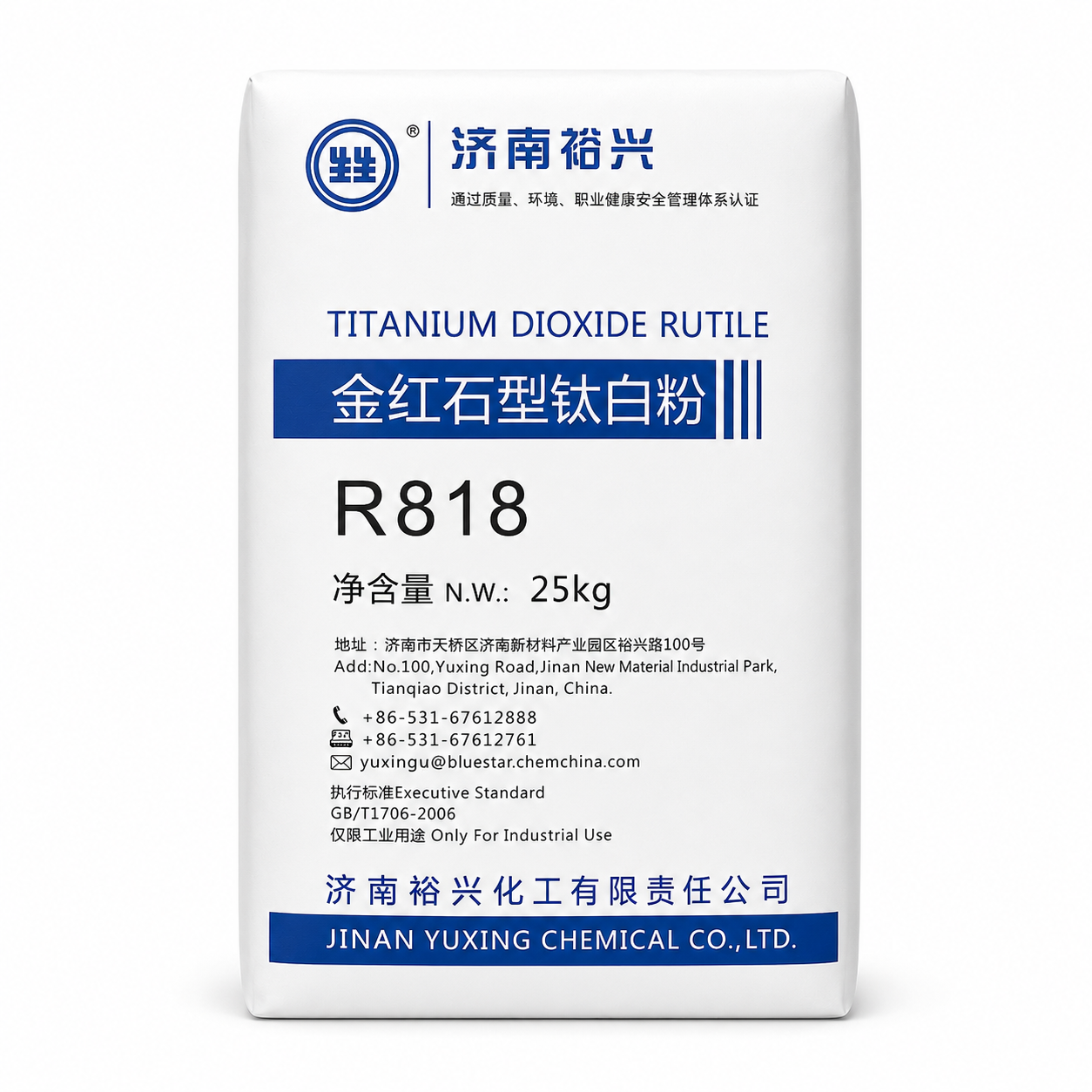
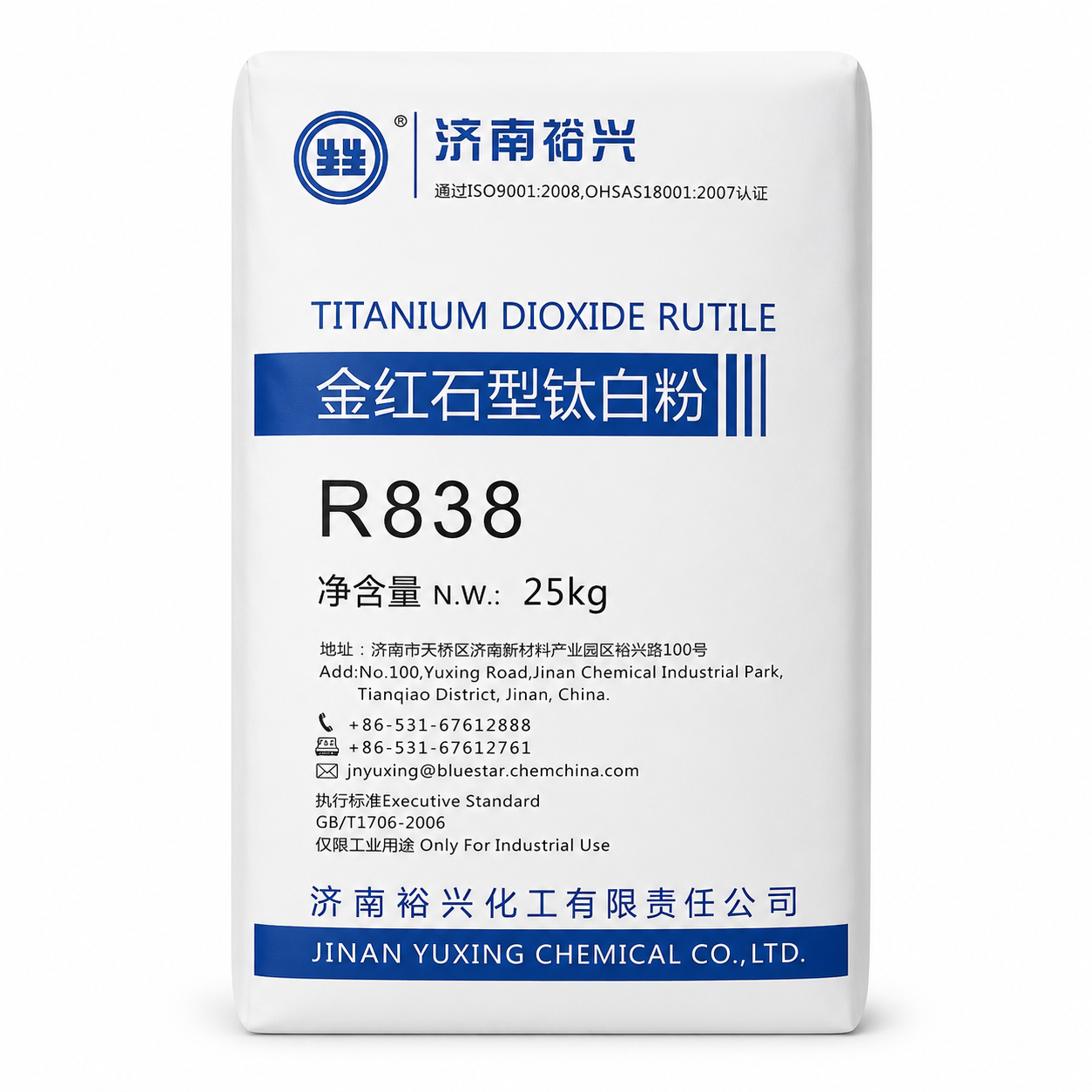
R818 vs R838: undertone and application focus.
R818 has a yellow undertone and general-purpose positioning. R838 has a blue undertone and is particularly suited to waterborne coatings.
| Grade | Undertone | Selection focus |
|---|---|---|
| R818 | Yellow undertone | General-purpose formulations |
| R838 | Blue undertone | Particularly suited to waterborne coatings |
These qualitative characteristics complement the manufacturer TDS. Confirm colour, dispersion and performance in your formulation; the wider manufacturer-listed application range remains available for qualification.
Which rutile grade?
Manufacturer TDS specification values are shown below. These are specification limits, not a promise that every grade uses the same test method; the agreed specification and lot COA govern the shipment.
| Grade | TiO₂ purity | Surface treatment | Oil absorption | pH | Manufacturer TDS application |
|---|---|---|---|---|---|
| R818 | ≥94% | Si/Al inorganic + organic | ≤22 g/100g | 6.5-8.5 | Plastics, coatings, rubber, masterbatch, papermaking |
| R838 | ≥92% | Si/Al inorganic + organic | ≤20 g/100g | 6.5-8.5 | Plastics, coatings, rubber, masterbatch, papermaking |
| R868 | ≥93% | Zr/Al inorganic + organic | ≤19 g/100g | 7.0-8.8 | High-performance coatings |
| R878 | ≥96% | Al inorganic + organic | ≤18 g/100g | 6.5-8.5 | Plastics, masterbatch, flexible PVC, rubber |
Source: Jinan Yuxing manufacturer TDS supplied to TiO2 Source. Values shown are specification limits. Request the current controlled TDS and batch COA before approval.
Qualify the grade beyond the crystal form.
Use the application, process and specification guides below before approving a trial or replacement.
R838 supplier & specification
Build the RFQ around the producer TDS, agreed limits, sample trial and batch COA.
Open guide → Exterior coatingsSelect for weatherability
Compare surface treatment, chalk resistance, gloss retention and formulation trials.
Open guide → White masterbatchSelect for dispersion
Review resin compatibility, moisture, loading, processing stability and film quality.
Open guide →Why rutile?
Rutile is the more thermodynamically stable crystal form of titanium dioxide. Its tightly packed lattice gives a higher refractive index and superior resistance to UV degradation and chalking compared with anatase — which is why rutile dominates exterior and high-durability applications.
Choose the crystal family and named grade from the documented application, surface treatment and acceptance tests—not price assumptions. The current A1 anatase TDS lists rubber, paint, plastics, papermaking and printing ink; each use still requires formulation qualification.
Rutile TiO₂ — common questions.
What is the difference between rutile and anatase titanium dioxide?
Rutile is the more thermodynamically stable crystal form of TiO2 and is normally evaluated where UV durability and weatherability matter. The current A1 anatase TDS lists rubber, paint, plastics, papermaking and printing ink; it does not list ceramics or welding electrodes.
Which rutile grade should I use for exterior coatings?
R868 is the documented starting grade for high-performance coatings and uses Zr/Al inorganic surface treatment. Exterior weatherability and gloss retention must still be qualified in your formulation and trial protocol. R878 is positioned by its manufacturer TDS for plastics, masterbatch, flexible PVC and rubber rather than as the default exterior-coating grade.
What is sulphate-process rutile TiO2, and how does it compare with chloride-process?
R818, R838, R868 and R878 are sulphate-process grades. Sulphate and chloride are production routes, not interchangeable performance specifications. Compare the named grade, surface treatment, test methods, controlled TDS, application trial and lot COA rather than assuming equivalence from the process route alone.
Do you provide a COA and technical datasheet?
Yes. A full technical datasheet is provided with every quotation, and a certificate of analysis (COA) accompanies every lot. Each order is inspected against your specification before shipment.
Are you the manufacturer of R818, R838, R868 and R878?
No. R818, R838, R868 and R878 are manufactured by Jinan Yuxing Chemical. TiO2 Source is the website name used for product information and inquiry coordination; the contractual seller and exporter are confirmed for each transaction.
What applications is rutile TiO2 used for?
The manufacturer TDS lists R818 and R838 for plastics, coatings, rubber, masterbatch and papermaking; R868 for high-performance coatings; and R878 for plastics, masterbatch, flexible PVC and rubber. Printing ink is listed for the A1 anatase grade, not for these four rutile TDS documents. See the applications guide.
Need a rutile grade matched to your spec?
Tell us your application, target market and volume — we'll recommend a grade and send a quotation within 24 hours.